December 31, 2012

My top 5 of 2012

1. Fiona Apple made an incredible album

Like Frank Ocean's channel Orange, Fiona Apple's fourth full length, The Idler Wheel is Wiser than the Turner of the Screw and Whipping Cords Will Serve You More than Ropes Will Ever Do was something most critics could get behind regardless of bias. Unlike the circumstances that surrounded Apple's previous releases, the press actually seemed ready for something this emotionally raw and thematically bizarre. The awkward release of Extraordinary Machine in 2005 (prefaced by the leak of demos from 2004, which sounded more like collaborations between Apple and her then producer Jon Brion) led to an uneven album, as well as a minor split between fans who preferred the new arrangements with Mike Elizondo and the fans who believed Apple's earlier demos with Brion to be superior.

I fell into the latter category, and I remember being blown away by the Extraordinary Machine demos; they made good on the promise of 1999's When the Pawn... (which arguably remains Apple's best record) and took her songwriting in a much stranger direction. Brion's signature in the productions was unmistakable. The songs were dark and despairing, but Brion's orchestral arrangements achieved a balance between the ruthlessness of Apple's musical ambition and her mad swell of romantic energy. Apple's concern, and the reason why the album was delayed and reworked before its proper release, was that Brion's compositions overshadowed her songwriting. Upon re-listening, Apple seems wholly justified and it's clear that she's been careful to avoid the same problems since.

Musically, The Idler Wheel... is Fiona Apple's sparest record. The accompaniment of percussion (and any instrumentation beyond the piano) serves her material, which is always jarringly personal and, for that reason, always slightly askew. As The Onion's AV Club review put it, "the production feels compulsive, not calculated." This distinction works to describe most of the album, and I'd argue that Jon Brion's earlier work with Apple achieved the same effect despite working from the opposite direction. Apple's persona is dangerously excessive. In this year's Valentine's Day post, I suggested that for Apple, love always occurs at a pathological level. The point is distilled throughout the songs of The Idler Wheel..., but the line that lays it out best occurs in its centrepiece: the playful, sporadic "Left Alone." "How could I ask anyone to love me," Apple realizes, "when all I do is beg to be left alone." The whole "I'm my own worst enemy" thing is one of the worst pop culture cliches, and though Apple's project frequently suggests as much, she avoids reducing her emotions to the rational and the obvious.

2012 was peppered with news about Apple's run-in with the law, her touching responses to fans, and her tour cancellation (she wanted to spend time with her dog who was dying of cancer). (My favourite interview/article, which celebrated her as a "musical hermit" came courtesy of New York Magazine.) The headlines were amusing but The Idler Wheel... provides us with a self-portrait of real depth, and it has album artwork to match (assembled from a stack of designs and doodles that Apple gave to her record company). As an amateur critic, I can say without reservation that The Idler Wheel... is Apple's strongest and most cohesive artistic statement yet. As a longtime fan, I can also say that she's finally delivered on her promise in a style and format that allows her songwriting to thrive. I've always had pretty strong convictions with regard to Fiona Apple and it's nice to finally see internet buzz machine working in her favour. God knows she deserves it.

Fiona Apple: "Left Alone"


2. The "garage rock" revival revival


Remember popular music in 2001? Remember the attempts of taste-making dinosaurs like Rolling Stone and Spin to market a "return" to rock and roll, despite proclamations by major bands like Radiohead that "rock is dead"? Looking back, the connection between the changing face of music journalism and new trends in popular music has to be made. For the teenage me, those rags were the real engines that drove musical exploration; they were resources, guides, and often oracles for the next big thing. But by the turn of the millennium, they were also becoming outdated and increasingly selective. So it makes sense that a return to the hallowed tradition of rock (in bands like The White Stripes, The Vines, The Strokes, Interpol, and countless others) would give magazines like Spin and Rolling Stone a boost.

All this preamble, simply to say that 2012 saw a minor surge in critically successful albums that bear some resemblance to the garage rock revival of yesteryear. Or, at least they pick up where some of those other bands left off, which is also to say that despite the seeming groundswell of 2001, garage rock has never really gone away. My favourite "rock" albums of this year came from retro outfits like Tame Impala, The Men, Thee Oh Sees (who've been plugging away for the better half of a decade), and their prolific wunderkind pal, Ty Segall.

Australia's Tame Impala released their debut back in 2010. It was an awesome mess of pop hooks and psychedelic guitar effects. Lonerism works with the same kind of energy, but this time around there's a focussed theme and the songs are simply tighter. In a similar way, Putrifiers II is Thee Oh Sees at their most polished and listenable. If indie rock has a sound that it should striving for, it's captured by Thee Oh Sees. Songs like "Floods New Light" and "Wax Face" are exceedingly ballsy jams, while "Wicker Park" closes Putrifiers II with an amusing swell of strings that makes for a comic conclusion to a very different sounding album. It would be easy to describe Thee Oh Sees' sound as "disaffected" but there's plenty of feeling here; it's just that most of the time, it's put in its proper place, amid all the bullshit.

Tame Impala: "Mind Mischief"

Thee Oh Sees: "Wax Face"


3. The year of the loner
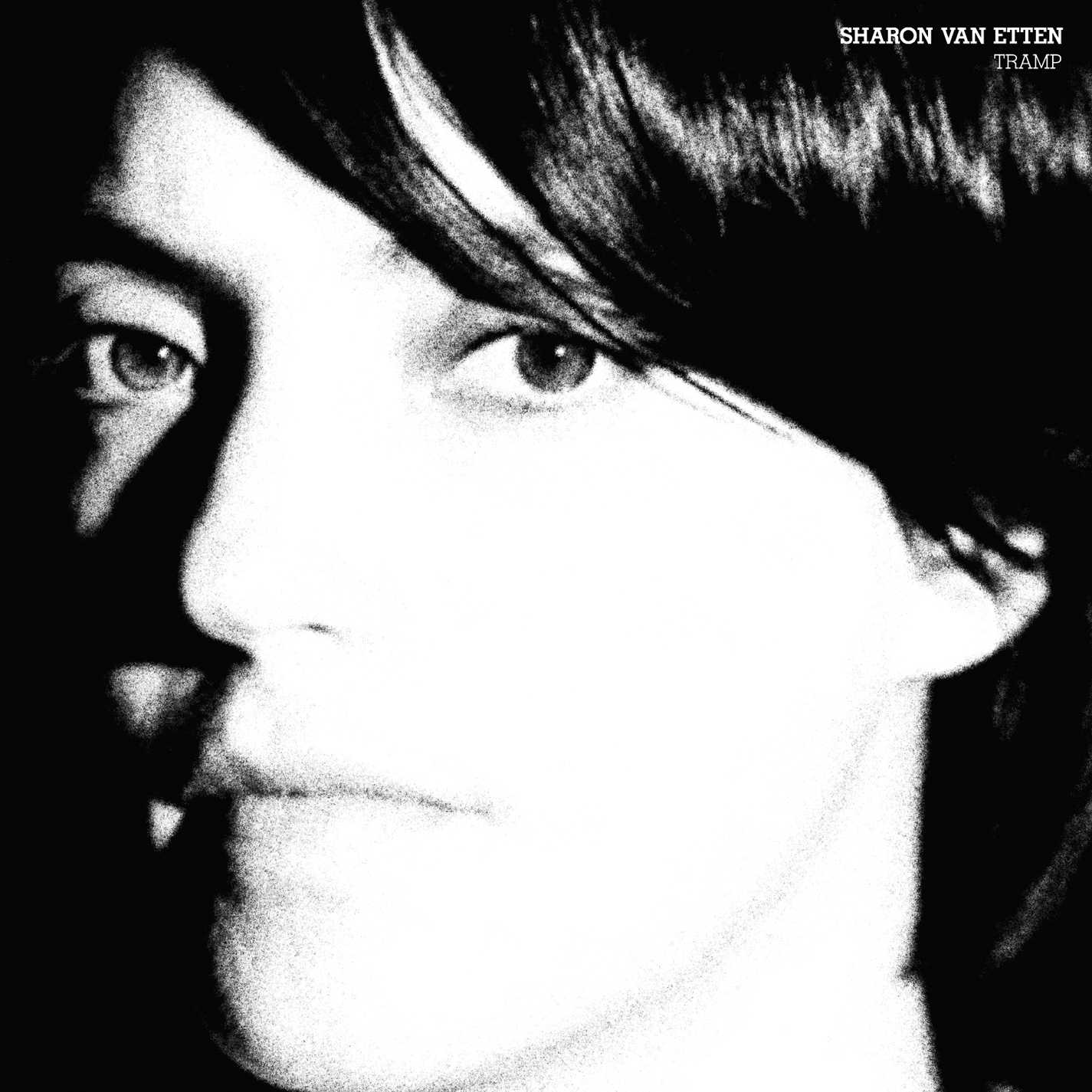

Along with a glimpse of Fiona Apple's brooding ego and Tame Impala's sonic embrace of alienation, Sharon Van Etten's Tramp gave the loner in me plenty to chew on. Folk singer-songwriters are a dime a dozen, but Van Etten (like Fiona Apple) demonstrates how compelling one can be in the wake of failed relationships: she stands as a flawed source of resolve, but also site of doubt and despair. Tramp is easily Van Etten's best, and as title might suggest, the album isn't simply a breakup record; it's about a compulsion toward heartbreak and isolation, the passage in and out of relationships, over and over again. It's a dozen breakup albums rolled into one. No surprise, then, that Tramp is at times ridiculously sad. "Warsaw" opens the album with a resounding note of futility. Moments later, the chorus of "Give Out" finds Van Etten mourning her relationship before it even takes off: "you're the reason why I'll move to the city, you're why I'll need to leave." The comparatively upbeat lead single, "Serpents," continues in a similar tone, addressing the speaker's self-projections head-on through a former partner who "hold[s] the mirror to everybody else." Every one of Tramp's songs is heartbreaking (even "We Are Fine," her decisively optimistic duet with Beirut's Zach Condon) and it's hard not to be swept away by the power of Van Etten's emotional despair. So, in conclusion, be careful with this one.

Sharon Van Etten: "Give Out"


4. Est. Brooklyn, 2009


Speaking of history repeating itself, 2012 saw the release of new albums from three of the biggest Brooklyn indie bands and one of its most overlooked, each of whom released their previous (breakthrough) full length in 2009. Unlike all the critical fanfare that accompanied Merriweather Post Pavilion, Animal Collective's latest record, Centipede Hz, came and went without much notice. Grizzly Bear and the Dirty Projectors, on the other hand, released some of their best material. Since 2006's Yellow House, I've been a big fan of Grizzly Bear and I was prepared for an album that would continue in the direction of Veckatimest. For better or worse, Shields does not do that. Initially, I found it rather dull and bleak. It took some time, but once I had an access point ("Yet Again"), Shields became an expansive record, full of some really epic moments. The compositions are dense and meandering, while the conceptual terrain is equally dark and plodding. For me, this resulted in what was probably the most immersive listening experience of the year. With Shields, Grizzly Bear has created a rich and sombre world, one that I couldn't easily escape and still don't really want to.

David Longstreth's latest with the Dirty Projectors marches forward with a less totalizing and more optimistic outlook. The songs on Swing Lo Magellan mark a real improvement over 2009's Bitte Orca (which I still consider to be one of the previous decade's best albums) because they take what's best about the Dirty Projectors' sound, composition, and approach and make it personable. The pretence of Longstreth's lyrics has also been toned down (though he did follow the example of Kanye's "Runaway" video and direct a eccentric half-hour film based on the album). And although the song structures are slightly more conventional than they have been, this approach finds the Dirty Projectors at their best.

Unlike the big three I've mentioned, Here We Go Magic hasn't really been subject to the hype of the indie music buzz machine. Their 2009 debut drew equally from the baroque pop of Grizzly Bear and the DIY electronica of Animal Collective. This time around, however, we get a crisp and restrained sounding record that takes its nautical title (A Different Ship) quite seriously. Radiohead producer Nigel Godrich assists with an album that is at times energetic ("I Believe In Action"), unabashedly romantic ("How Do I Know"), and perfectly subtle ("Over the Ocean," "Alone But Moving," "Miracle of Mary"). The latter, slower ballads leave me thinking that frontman Luke Temple has been listening to a lot of Talk Talk, and one can never listen to too much Talk Talk.

Dirty Projectors: "Gun Has No Trigger"

Grizzly Bear: "Sun In Your Eyes"
Here We Go Magic: "Over the Ocean"


5. R&B is very cool right now

This one is pretty self-explanatory

My favourite albums from 2012

1. The Idler Wheel ... - Fiona Apple
2. Lonerism - Tame Impala
3. Putrifiers II - Thee Oh Sees
4. Tramp - Sharon Van Etten
5. A Different Ship - Here We Go Magic
6. Swing Lo Magellan - Dirty Projectors
7. Shields - Grizzly Bear
8. Spooky Action at a Distance - Lotus Plaza
9. Hair - Ty Segall & White Fence, Twins - Ty Segall, Slaughterhouse - Ty Segall Band
10. Allelujah! Don't Bend! Ascend! - Godspeed You! Black Emperor
11. Total Loss - How to Dress Well
12. Animal Joy - Shearwater
13. Sweet Heart Sweet Light - Spiritualized
14. The Haunted Man - Bat for Lashes
15. Open Your Heart - The Men
16. 2 - Mac Demarco
17. Oshin - DIIV
18. channel Orange - Frank Ocean
19. Nootropics - Lower Dens
20. Moms - Menomena

December 24, 2012

"Christmas" by George Herbert

( I )

After all pleasures as I rid one day,
My horse and I, both tired, body and mind,
With full cry of affections, quite astray;
I took up the next inn I could find.

There when I came, whom found I but my dear,
My dearest Lord, expecting till the grief
Of pleasures brought me to Him, ready there
To be all passengers' most sweet relief?

Oh Thou, whose glorious, yet contracted light,
Wrapt in night's mantle, stole into a manger;
Since my dark soul and brutish is Thy right,
To man of all beasts be not Thou a stranger:

Furnish and deck my soul, that Thou mayst have
A better lodging, than a rack, or grave.


( II )

The shepherds sing; and shall I silent be?
      My God, no hymn for Thee?
My soul's a shepherd too; a flock it feeds
      Of thoughts, and words, and deeds.
The pasture is Thy word: the streams, Thy grace
      Enriching all the place.
Shepherd and flock shall sing, and all my powers
      Outsing the daylight hours.
Then will we chide the sun for letting night
      Take up his place and right:
We sing one common Lord; wherefore he should
      Himself the candle hold.
I will go searching, till I find a sun
      Shall stay, till we have done;
A willing shiner, that shall shine as gladly,
      As frost-nipped suns look sadly.
Then will we sing, and shine all our own day,
      And one another pay:
His beams shall cheer my breast, and both so twine,
Till ev'n His beams sing, and my music shine.


December 16, 2012

Gardens of the mind


This charming video is part of a series that was produced for PBS Digital Studios by Symphony of Science's John D. Boswell. Other videos feature Julia Child, Reading Rainbow's Levar Burton, and Bob Ross. They're all worth checking out but I find this one to be the most amusing of the bunch, probably because it falls into a long tradition that treats the mind as a garden, a place of cultivation and possibility. Of course, "The Garden" by the seventeenth century English parliamentarian Andrew Marvell draws this out in more ambiguous terms.
Meanwhile the mind, from pleasure less,
Withdraws into its happiness :
The mind, that ocean where each kind
Does straight its own resemblance find ;
Yet it creates, transcending these,
Far other worlds, and other seas ;
Annihilating all that's made
To a green thought in a green shade. 
See "The Garden" in full.

December 4, 2012

Atoms for Peace (feat. Thom York) - "Default"

The first single from Thom Yorke's new side project, Atoms for Peace, which features producer Nigel Godrich, the Red Hot Chili Peppers' Flea, Joey Waronker, and percussionist Mauro Refosco. Their debut LP, Amok, arrives in late February.

November 30, 2012

Notes on Gothic architecture

I've spent the better part of this semester dealing with a constant influx of tedious, technically demanding assignments. Rather than academic writing, it's been a lot of drawing, painting, cutting, and pasting. As part of my design program, I was also required to take a design history course with a more familiar workload: a term paper of 1000-1200 words, as well as the usual midterm and final exam. I've found the course agonizing, not only because it involves a weekly three hour lecture, but because its approach is crudely reductive and often misguided. I just finished writing my term paper and, despite the limitations of a first year research paper, I did enjoy writing something short and concise. Considering that my last written assignment was a 45000 word thesis, it was a bit of challenge reigning in my subject and not following all the tangents that arose as I was writing.

The paper is bland so I won't post much of it here, but some of my sources proved rewarding in the end. Most of all, it was Roland Recht's recently translated book, Believing and Seeing: The Art of Gothic Cathedrals (The University of Chicago Press), that gave the best analysis of my subject. I decided to write on the architecture of Gothic cathedrals; more specifically, I gave a brief analysis of the reconstruction of Canterbury cathedral in the later part of the 12th century, right around the time of Thomas Becket's dispute with Henry II and the archbishop's subsequent martyrdom/veneration. Recht's book argues that Gothic cathedrals supported an emerging appetite for images that made visible the signs of scripture: "Metalworkers, for example, fashioned intricate monstrances and reliquaries for the presentation of sacred articles, and technical advances in stained glass production allowed for more expressive renderings of holy objects." Recht reads this growing emphasis on the visual alongside developments in the theory of optics, the elevation of the divine Host in the ceremony of the Eucharist, the increasing influence of tradesmen and their consolidation into a pivotal class.

I started out hoping to use some of John Ruskin's writing on Gothic cathedrals to frame my argument, but I wasn't all that surprised when Ruskin's sweeping projections weren't of much use. Reading through parts of The Stones of Venice again after almost a decade, I was struck by the bizarre dynamic he sets up between architecture, labour, and history.
Whenever the workman is utterly enslaved, the parts of the building must of course be absolutely like each other; for the perfection of his execution can only be reached by exercising him in doing one thing, and giving him nothing else to do. The degree in which the workman is degraded may thus be known at a glance, by observing whether the several parts of the building are similar or not; . . . if, as in Gothic work, there is perpetual change both in design and execution, the workman must have been altogether set free. (93)
This positive view of human labour, which arises from Ruskin's deeply Christian humanism, is nothing surprising. It's fairly well-known that his valourization of medieval Europe had less to do with historical conditions than it did with specifically Victorian concerns over crises of faith, the brutal working conditions of English factories, and profound confidence in scientific progress. But when you actually look at the way most Gothic cathedrals were built, their stylistic incongruities had little to do with the unique wills of their workmen or a space of freedom in which to pursue their individual desires. Ruskin's affirmation of the workman's freedom has more to do with the fact each individual will was reigned in by the humbling framework of Christianity. In the case of Canterbury, for example, the addition of the Gothic style to an already existing Romanesque foundation occurred because a French architect was charged with rebuilding a choir that had been damaged in a fire; five years into the project William of Sens fell off a scaffold and the project was given over to an Englishman. Further changes can be traced back to the political disputes between the Catholic church and the English crown, not unlike the conflicts that led unsanctioned murder of Thomas Becket. It should also be remembered that these buildings took decades (or longer) to finish, which doesn't really allow for the kind of flippancy Ruskin ascribes to their planning. At the same time, Ruskin's interpretation of Gothic architecture does do us the service of distancing the medieval imagination from the formal limitations of our own:
And it is one of the chief virtues of the Gothic builders, that they never suffered ideas outside symmetries and consistencies of what they did. If they wanted a window, they opened one; a room, they added one; a buttress, they build one; utterly regardless of any established conventionalities of external appearance, knowing (as indeed it always happened) that such daring interruptions of the formal plan would rather give additional interest to its symmetry than injure it. So that, in the best times of Gothic, a useless window would rather have been opened in an unexpected place for the sake of surprise, than a useful one forbidden for the sake of symmetry. Every successive architect, employed upon a great work, built the pieces he added in his own way, utterly regardless of the style adopted by his predecessors; and if two towers were raised in nominal correspondence at the sides of a cathedral front, one was nearly sure to be different from the other, and in each the style at the top to be different from the style at the bottom" (Ruskin 98).
For Ruskin, such irrationality reflected human conditions of understanding and fallenness; like a good Augustinian, Ruskin believed that such epic inconsistencies actually glorified God and avoided the pitfalls of idolatry and hubris. Yet it's hard to imagine the medieval workman as a free individual, or as someone whose daily toil was actually dignified and ennobling, unless such work is read through a nostalgic lens that privileges a theological structure (for its own sake) over a social and economic one.